Why Adhesions Can Recur After Surgery: What to Know

If you’ve had surgery and been told adhesions have come back, your first instinct might be to wonder what went wrong. The truth is harder and more frustrating than that. Understanding why adhesions can recur after surgery has nothing to do with surgical error and everything to do with how the human body heals. Adhesions are bands of scar tissue that form between organs and tissues after surgery, and adhesions affect up to 90-94% of patients following major abdominal or pelvic procedures. This article breaks down the biology, the risk factors, and what can actually be done.
Table of Contents
- Key takeaways
- What adhesions are and how they form after surgery
- Why adhesions can recur after surgery
- Strategies to reduce adhesion formation and recurrence
- Managing symptoms, diagnosis, and treatment options
- My honest take on adhesion recurrence
- What to do next if you’re dealing with adhesion recurrence
- FAQ
Key takeaways
| Point | Details |
|---|---|
| Adhesions are a normal healing response | The body forms scar tissue after any surgical trauma as part of its repair process. |
| Removing adhesions can create new ones | Adhesiolysis triggers fresh inflammation, which often generates denser adhesions than before. |
| Recurrence rates are high regardless of technique | Even laparoscopic surgery carries a 10-30% adhesion recurrence rate after removal. |
| Barriers and technique reduce but don’t eliminate risk | Adhesion barriers like Seprafilm can cut reoperation rates significantly but cannot guarantee zero recurrence. |
| Prevention works best at the first surgery | Proactive adhesion management during the initial procedure is far more effective than reactive treatment later. |
What adhesions are and how they form after surgery
Adhesions are fibrous bands of scar tissue that form when the body tries to repair itself after injury. Think of them as internal bridging material your body lays down when it senses tissue has been damaged. Normally, the body resorbs this temporary scaffolding cleanly. When the process goes wrong, the scar tissue remains and binds structures that should move freely.
The mechanism starts with the release of fibrin, a protein involved in clotting and wound repair, immediately after surgical trauma. This fibrin deposit is supposed to be temporary, serving as a scaffold while cells rebuild the injured area. But when inflammation lingers or the fibrinolytic system (the process that dissolves fibrin) is overwhelmed, fibroblasts move in and lay down permanent collagen fibers instead.
What makes this cycle so hard to break: The same biological signals that trigger healing also trigger adhesion formation. You cannot have one without risking the other.
Several factors beyond the surgery itself can worsen this process. Surgical trauma, infection, and radiation all contribute to adhesion formation and influence how severe they become. Underlying inflammatory conditions like Crohn’s disease or endometriosis amplify the process further. Even in patients with no prior surgery, the body can produce adhesions in response to internal inflammation alone. The connection between endometriosis and uterine scarring is a clear example of how inflammation without a surgical trigger still drives scar tissue formation.
The distinction between normal healing and pathological adhesion formation comes down to proportionality. A small adhesive band in a low-risk area may cause no symptoms at all. Dense adhesions binding the bowel, bladder, or uterus to surrounding structures can cause pain, organ dysfunction, and infertility.
Why adhesions can recur after surgery
This is where many patients feel blindsided. You had adhesions removed. You were told the surgery went well. Then they came back. Here is why that happens, and why it is predictable rather than preventable.
The surgical removal of adhesions is called adhesiolysis. The problem is that adhesiolysis itself triggers the body’s inflammatory healing response, which can generate new adhesions that are often denser than the ones that were removed. Cutting through scar tissue is still cutting through tissue. The body does not distinguish between intentional surgical incisions and accidental injuries. It responds to both the same way.
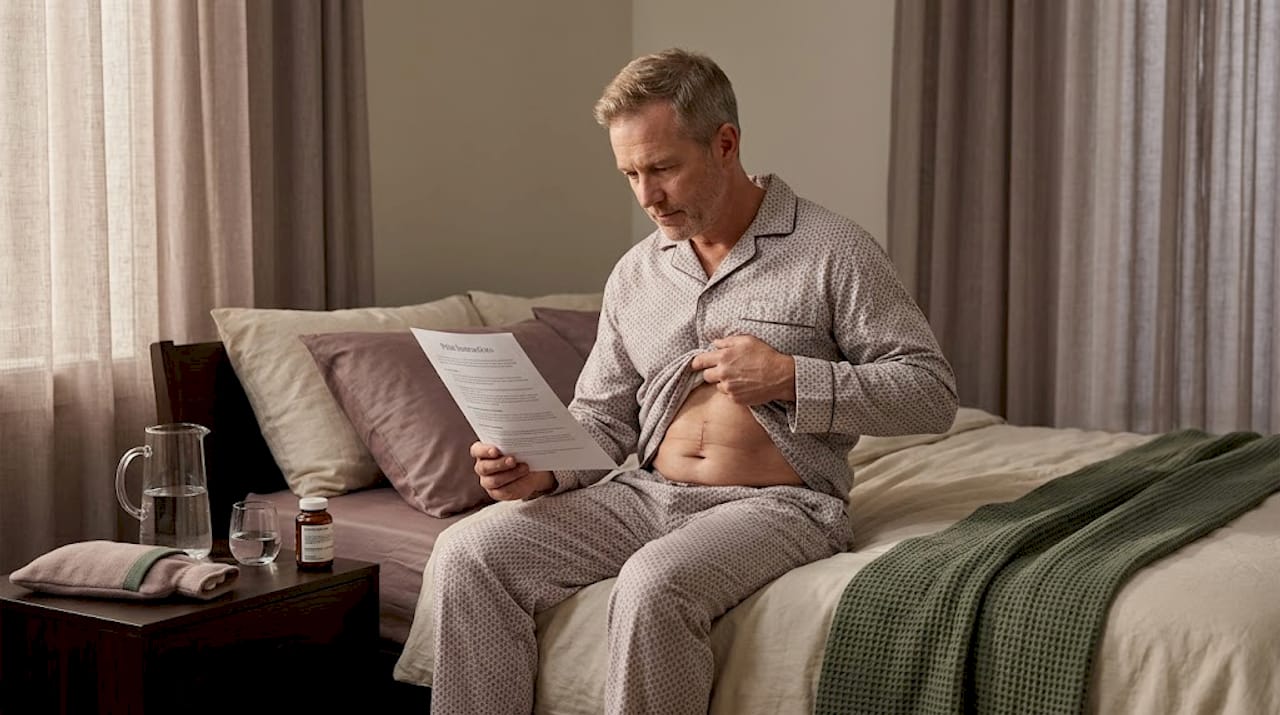
The key adhesion recurrence causes can be grouped into two categories:
Surgical factors
- Type of surgery: Open abdominal procedures cause significantly more tissue trauma than laparoscopic approaches, with correspondingly higher adhesion formation rates.
- Tissue handling: Rough manipulation, prolonged instrument contact, and tissue desiccation (drying out) all increase the inflammatory load on exposed surfaces.
- Operative duration: Longer procedures mean more cumulative tissue exposure and a greater window for adhesion-triggering inflammation to set in.
- Thermal injury: Electrosurgical tools, if used without precision, burn surrounding tissues and create additional inflammatory foci.
Patient factors
- Individual inflammatory response: Some people are biologically predisposed to form denser scar tissue. Genetics, immune function, and baseline inflammation all play a role.
- Prior surgeries: Each additional operation introduces new injury sites and compounds existing scar tissue.
- BMI above 25: Research links higher body mass to increased recurrence risk, likely because adipose tissue introduces additional inflammatory signals.
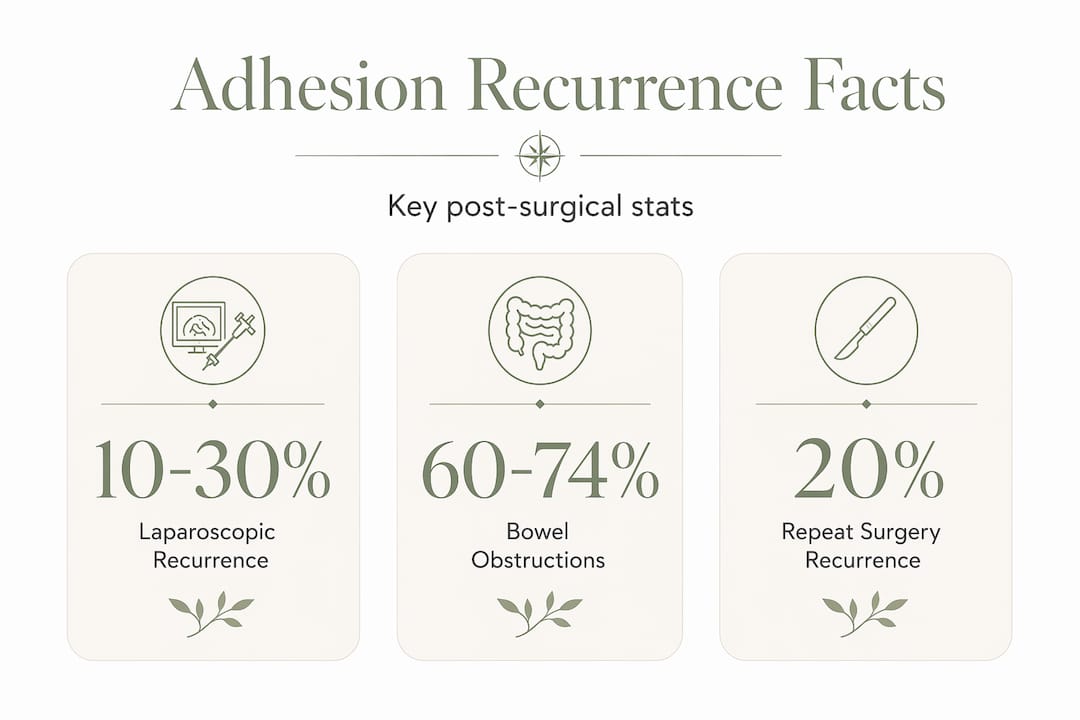
The numbers are sobering. Laparoscopic surgery reduces tissue trauma but still carries a 10-30% adhesion recurrence rate, and that rate climbs significantly with risk factors like longer operative time or elevated BMI. Open surgery carries far higher recurrence risk, with some studies describing rates approaching that 90% threshold seen in initial formation.
Postoperative adhesions also account for 60-74% of small bowel obstructions, with a 20% chance of recurrence after adhesiolysis surgery. In patients who have had multiple obstructive episodes, recurrence can happen within 11 months in about half of cases.
Pro Tip: If you are scheduled for a repeat adhesiolysis, ask your surgeon specifically what adhesion prevention measures will be used during the procedure. This conversation is most productive before, not after, the operation.
Strategies to reduce adhesion formation and recurrence
Surgeons do have tools to minimize adhesion recurrence. None of them eliminate the risk entirely, but the evidence supports meaningful reductions when they are used thoughtfully.
Surgical technique choices
Minimally invasive laparoscopic surgery is the first line of defense. Smaller incisions mean less tissue trauma, less desiccation of exposed surfaces, and a lower overall inflammatory burden. However, long-term recurrence risk still depends on individual patient factors, not just the approach.
Beyond the choice of open versus laparoscopic, how a surgeon handles tissue matters enormously. Keeping the surgical field moist reduces surface cell death. Using bipolar electrocautery instead of monopolar tools limits burn spread to surrounding peritoneum. Leaving the peritoneum open rather than closed during closure has also been shown to significantly reduce adhesion incidence, counter-intuitive as that sounds.
Adhesion barriers
Barrier products represent the most direct intervention for post-surgery adhesion prevention. Here is how the main options compare:
| Barrier type | Form | Mechanism | Evidence |
|---|---|---|---|
| Seprafilm (hyaluronate/carboxymethylcellulose) | Dissolvable film | Creates physical separation during healing window | Reduces reoperations by 51% |
| Sodium hyaluronate gel | Injectable gel | Supports mesothelial regeneration, reduces fibroblast activity | Reduces pain and adhesion formation vs. no barrier |
| Icodextrin solution (Adept) | Liquid | Hydroflotation separates surfaces during healing | Used primarily in gynecologic laparoscopy |
Barrier gel products work by forming a temporary coating over injured surfaces, preventing two raw tissue areas from making direct contact during the critical 5-7 day healing window when fibrin deposits form. Sodium hyaluronate specifically supports mesothelial cell regeneration, which is the cellular layer that naturally prevents organs from sticking together.
The timing of barrier application matters as much as the product itself. Prevention works best when applied during the initial surgery rather than reactively after adhesions have already formed. Once adhesions are established and recurrent, the same interventions become less predictable.
Pro Tip: Ask whether your surgical team plans to use an adhesion barrier and which type. This is a standard question in high-volume pelvic and abdominal surgical centers, and a good surgeon will have a clear answer.
Managing symptoms, diagnosis, and treatment options
Knowing why adhesions recur is useful. Knowing what to do when they do is more immediately practical.
The most common symptoms from adhesions include:
- Pelvic or abdominal pain, ranging from dull and chronic to sharp and episodic, often worse with movement or bowel activity
- Bowel obstruction symptoms, including bloating, constipation, nausea, and in serious cases vomiting and inability to pass gas
- Infertility or recurrent pregnancy loss, particularly when adhesions involve the uterus, fallopian tubes, or ovaries
- Painful intercourse, which often signals pelvic adhesions involving the uterosacral ligaments or posterior cul-de-sac
Diagnosis typically begins with symptom history and physical exam. Imaging like ultrasound or MRI can sometimes detect dense adhesions but cannot reliably identify thin fibrous bands. Diagnostic laparoscopy remains the gold standard. The catch is that performing laparoscopy to confirm adhesions introduces the same recurrence risk as the adhesiolysis itself.
The decision to repeat surgery deserves serious thought. Because adhesiolysis creates denser adhesions, most surgeons are reluctant to operate for chronic pain alone unless life-threatening complications like bowel obstruction are present. The calculation changes when quality of life is severely affected or fertility is at stake, but the recurrence risk does not disappear.
Non-surgical management options include targeted pain management, pelvic physiotherapy, dietary modifications to reduce bowel irritation, and hormonal support to reduce ongoing inflammation. For women dealing with uterine adhesions specifically, understanding how to manage pain after procedures and what recovery support looks like is a practical starting point. The connection between uterine adhesions and recurrent miscarriage is also well documented for anyone navigating that particular overlap.
Pro Tip: Before agreeing to a repeat adhesiolysis, get a clear answer on two things: what adhesion prevention measures will be used, and what the surgeon’s realistic expectation is for symptom relief. Both answers tell you a lot.
My honest take on adhesion recurrence
I want to be direct about something that took me a long time to accept: adhesion recurrence is not a surgical failure. It is a biological inevitability in certain bodies and certain contexts. That does not make it less painful to hear, but it changes what you do with the information.
What I have found genuinely frustrating is how rarely patients are told this upfront. The conversation about surgical adhesion management and recurrence risk should happen before the first procedure, not after adhesions have come back and the options are narrowing. I have spoken with so many women who walked into repeat surgeries without understanding that the act of removing adhesions could make them worse. That is informed consent failing at a fundamental level.
From my perspective, the most protective thing a patient can do is ask hard questions before any procedure. What technique will you use? Will you use a barrier? What is your realistic expectation for my outcome given my history? A surgeon worth trusting will welcome those questions. One who dismisses them is worth reconsidering.
I also think there is room for optimism that is not naive. Research on adhesion barriers, improved laparoscopic techniques, and anti-inflammatory adjuncts is active and moving. We are not stuck with the outcomes of ten years ago. But the gains come from informed patients and careful surgical planning, not from any single breakthrough product.
— Daniella
What to do next if you’re dealing with adhesion recurrence
Managing adhesion recurrence is not a single decision. It is a series of informed choices made with good information in hand.

Theashermanscompass was built for exactly this kind of situation. Whether you are trying to understand a recent diagnosis, preparing for a procedure, or trying to make sense of why surgery did not resolve your symptoms, the complete recovery guide at Theashermanscompass walks you through the evidence, the questions to ask your specialist, and the management strategies that actually hold up. It is 120 pages written by someone who has been through it, and it does not waste your time on generic advice. If you are ready to stop piecing things together from Reddit and 3am searches, this is where to start.
FAQ
What causes adhesions to come back after removal?
Removing adhesions surgically creates new tissue injury, which triggers the same inflammatory healing process that formed the original adhesions. The resulting scar tissue is often denser than before, making recurrence a predictable biological outcome rather than a surgical mistake.
How common is adhesion recurrence after surgery?
Recurrence rates vary by procedure type. Laparoscopic adhesiolysis carries a 10-30% recurrence rate, while open abdominal surgery is associated with adhesion formation in up to 90-94% of patients. Individual risk factors like prior surgeries and BMI increase those numbers further.
Can adhesion barriers prevent recurrence completely?
No barrier eliminates recurrence entirely, but the evidence is meaningful. Seprafilm, for example, reduces reoperation rates by 51% compared to no barrier. Barriers work by physically separating tissue surfaces during the first critical days of healing when fibrin deposits form.
When should you consider surgery for adhesions again?
Most surgeons recommend repeat adhesiolysis only when adhesions are causing life-threatening complications like bowel obstruction or when quality of life and fertility are severely impacted. Chronic pain alone typically warrants non-surgical management first, given the risk of generating denser scar tissue.
Can adhesions cause infertility and pregnancy loss?
Yes. Adhesions involving the uterus, fallopian tubes, or ovaries are a well-documented cause of infertility and recurrent miscarriage. Uterine adhesions in particular can prevent implantation or disrupt the uterine lining needed to sustain a pregnancy.
Recommended
- Recurrent Miscarriage & Uterine Adhesions: Is There a Connection? | The Asherman’s Compass
- Can You Get Pregnant With Asherman’s Syndrome? What I Learned | The Asherman’s Compass
- How to manage pain after Asherman’s procedure | The Asherman’s Compass
- Endometriosis & Uterine Scarring: How They Affect Fertility Together | The Asherman’s Compass
Ready to Understand Your Body Better?
The Complete Asherman's Compass Guide covers everything from diagnosis to recovery — written from lived experience, backed by evidence.
Get the Complete Guide — $97Medical Disclaimer: This article is written from personal experience and is for informational purposes only. It is not medical advice. Please consult a qualified healthcare professional for diagnosis and treatment. The Asherman's Compass does not provide medical diagnoses.
Last reviewed: May 2026