Dismissed Period Symptoms Advocacy Checklist for Women

You’ve left a doctor’s office feeling unheard, again. Your pain was real, your symptoms were real, and yet you walked away with nothing but a suggestion to “track your stress.” If that sounds familiar, you are not alone. The dismissed period symptoms advocacy checklist in this guide exists precisely because too many women spend years cycling through providers without answers. The average diagnostic delay for endometriosis is 6 to 12 years, with most patients seeing four or five providers before anyone takes them seriously. That is not a personal failure. It is a systemic one. And preparation is your most powerful response.
Table of Contents
- Key takeaways
- 1. Start with a dismissed period symptoms advocacy checklist mindset
- 2. Track your symptoms in clinical detail before the appointment
- 3. Prepare your medical history and targeted questions
- 4. Use assertive language when your symptoms are dismissed
- 5. Key items to include in your advocacy checklist
- 6. Advocacy tactics that work versus ones that backfire
- 7. Next steps after your advocacy succeeds
- My honest take on why this keeps happening
- Tools to support your advocacy and recovery
- FAQ
Key takeaways
| Point | Details |
|---|---|
| Document before you go | Detailed symptom logs shift clinical conversations from subjective complaints to data-driven discussions. |
| Use validated scoring tools | Numerical symptom scores are harder for providers to dismiss than verbal descriptions alone. |
| Ask for documented refusals | Requesting that a provider document their reasoning in your record often changes how they respond. |
| Bring a support person | Having an advocate present increases the likelihood of thorough evaluations and referrals. |
| Seek second opinions without guilt | Accepting one dismissal is not your only option. Persistence across providers shortens diagnostic timelines. |
1. Start with a dismissed period symptoms advocacy checklist mindset
Before you walk into any appointment, the most important shift is mental. You are not there to convince someone you are suffering. You are there to present clinical information and request a clinical response. That reframe changes everything about how you show up.
Women with dismissed symptoms often arrive apologetically, minimizing their pain to seem “reasonable.” This works against you. Severe symptoms that disrupt sleep or work should be reported as exactly that. Severe. Not “a bit rough” or “probably nothing.” Honest, precise reporting is not dramatic. It is medically necessary.
This checklist approach treats your body like a case file. Every item you document, every question you prepare, and every response you record becomes evidence. That evidence is what moves the conversation forward.
2. Track your symptoms in clinical detail before the appointment
Vague descriptions give providers room to dismiss you. Specific data does not. Your menstrual symptoms checklist should capture pain intensity on a 0 to 10 scale, the exact timing within your cycle, bleeding volume and changes from your baseline, and any secondary symptoms like nausea, bowel changes, or fatigue.

Functional impact matters just as much as physical symptoms. Note how many days of work you missed, which social events you skipped, and how your sleep was affected. These details transform “my periods are bad” into “I missed three days of work last month and have not slept through the night during my cycle in six months.”
Validated symptom assessment tools provide objective evidence that is genuinely harder to dismiss. Presenting a numerical score reframes the entire consultation from a subjective conversation to a clinical one. Print your scores and bring them.
Pro Tip: Choose a typical cycle week to complete any symptom scoring tools. Skewed symptom data from periods of unusual stress or illness can underrepresent your actual baseline and weaken your case.
3. Prepare your medical history and targeted questions
Your provider has limited time. Walking in with a one-page summary of your relevant history, current medications, and prior test results tells them immediately that you are organized and serious. It also reduces the chance that critical context gets missed in a rushed appointment.
Write your questions in priority order. If you only get five minutes of real dialogue, you want your most important questions answered first. Focus on what you need from this specific visit: a referral, a particular test, or an explanation of why a previous result was considered normal.
Effective self-advocacy begins before you enter the room. The preparation you do at home determines how much clinical ground you can cover once you are there. Bring printed copies of everything, including your symptom log, your questions, and any prior test results you have access to.
4. Use assertive language when your symptoms are dismissed
When a provider tells you your symptoms are “normal” or “probably anxiety,” you need language ready that is firm without being confrontational. Here are phrases that work:
- “I understand that some variation is normal, but this represents a significant change from my previous baseline.”
- “I would like to understand what specific criteria would need to be met for this to warrant further investigation.”
- “My symptoms are affecting my ability to work and sleep. I want that documented.”
- “What would you recommend ruling out before concluding this is not a clinical issue?”
- “I would like a referral to a specialist. Can you document your reasoning if that is not something you are able to provide today?”
The goal of each phrase is to redirect the conversation toward symptom impact and clinical process rather than a debate about whether your pain is real. You are not asking for permission to be taken seriously. You are requesting a clinical response to clinical information.
Pro Tip: If a provider refuses a test or referral, ask them to document that refusal with their clinical reasoning in your medical record. This one request alone often shifts provider behavior significantly.
5. Key items to include in your advocacy checklist
This is the core of your period health advocacy guide. Customize this list to your situation, but treat each item as non-negotiable preparation.
Symptom tracking:
- Pain intensity score for each day of your cycle (0 to 10)
- Bleeding volume changes compared to your previous normal
- Cycle length and any irregularities in timing
- Secondary symptoms: bloating, bowel changes, pain with intercourse, fatigue
- Abnormal uterine bleeding patterns including frequency, duration, and volume
Functional impact metrics:
- Days of work or study missed per cycle
- Social events cancelled due to symptoms
- Sleep disruption frequency and severity
- Reliance on pain medication and whether it provides adequate relief
Diagnostic requests to raise:
- Full blood count and thyroid function
- Pelvic ultrasound if not recently completed
- MRI if ultrasound results were normal but symptoms persist. Normal ultrasound does not exclude endometriosis, and this is worth stating directly.
- Referral to a gynecologist or reproductive specialist
Documentation and follow-up:
- Record the provider’s response to each request
- Note what was agreed upon and what was declined
- Confirm your follow-up plan in writing before leaving
| Symptom | Advocacy trigger |
|---|---|
| Pain rated 7 or above | Request imaging and specialist referral |
| Missed work two or more days per cycle | Document functional impact formally |
| Bleeding significantly heavier than baseline | Request CBC and hormonal panel |
| Normal imaging with ongoing symptoms | Push for MRI or specialist evaluation |
| Symptoms dismissed without investigation | Request documented refusal with reasoning |
6. Advocacy tactics that work versus ones that backfire
Not all advocacy approaches produce the same results. Understanding what actually moves the needle helps you spend your limited appointment time wisely.
What works:
Concrete symptom data consistently outperforms verbal descriptions. Patients who bring organized symptom logs shorten diagnosis timelines by two to three years on average. Written records shift the consultation from a he-said-she-said dynamic to a data review. Persistence across multiple providers also matters. Accepting one dismissal as the final word is one of the most common ways women lose years of diagnostic time.
Having a support person present increases the likelihood of thorough evaluations and referrals. An advocate who can corroborate your symptoms and their functional impact changes how providers perceive the severity of your situation.
What backfires:
Minimizing your symptoms to seem cooperative. Framing pain as “probably nothing” gives providers a reason to agree with you. Arriving without documentation makes your experience sound anecdotal rather than clinical. Accepting reassurance without a follow-up plan leaves you with nothing to act on.
| Tactic | Typical outcome |
|---|---|
| Organized symptom log with scores | Shorter diagnostic timeline, more referrals |
| Vague verbal description of pain | Easier to dismiss, fewer investigations ordered |
| Support person present | Higher rate of thorough evaluation |
| Minimizing symptoms to seem reasonable | Symptoms recorded as mild, lower clinical priority |
| Requesting documented refusal | Often prompts provider to reconsider or explain |
| Accepting dismissal without follow-up | Diagnostic delay continues |
7. Next steps after your advocacy succeeds
Getting a referral or a diagnostic test ordered is a win. What you do next determines whether that momentum continues.
- Choose your specialist carefully. Look for gynecologists or reproductive endocrinologists with specific experience in menstrual disorders, endometriosis, or uterine conditions. A general referral to “gynecology” is a starting point, not a finish line.
- Keep tracking symptoms between appointments. Your log does not stop when you leave the office. Ongoing data shows treatment response and flags new developments.
- Know that diagnostic delays are common even after advocacy succeeds. You may need to repeat your checklist process with a new provider. That is not failure. It is the reality of how these conditions are managed.
- Connect with others who have navigated similar experiences. Communities built around conditions like endometriosis, Asherman’s syndrome, and unexplained fertility challenges offer practical knowledge that clinical settings rarely provide. The Asherman’s symptoms checklist at Theashermanscompass is one place to start if you suspect uterine involvement.
- Continue advocating post-diagnosis. A diagnosis does not mean the dismissal stops. Treatment decisions, surgical options, and fertility implications all require the same prepared, assertive approach.
My honest take on why this keeps happening
I spent years being told my symptoms were stress, anxiety, or just “how periods are for some women.” What I know now is that the dismissal was not personal. It was structural. Medical training historically underrepresented menstrual disorders, and one-third of women over 35 do not even recognize their own symptoms as clinically significant because the information was never given to them.
What changed things for me was not finding a kinder doctor. It was arriving prepared. When I walked in with a symptom log, a printed summary, and specific questions, the entire dynamic shifted. I was no longer a woman complaining about her period. I was a patient presenting a clinical picture.
The hardest part of this kind of advocacy is that it asks you to do extra work to be believed. That is genuinely unfair. And it is also, right now, the most effective tool you have. I have seen women shorten their diagnostic timelines by years simply by showing up organized. I have also seen women spend another decade in the dark because they kept hoping the next provider would just see it without being shown.
Preparation is not a workaround. It is the strategy. And you deserve to walk into every appointment knowing exactly how to use it.
— Daniella
Tools to support your advocacy and recovery
If you have been piecing this together from Reddit threads and 3am searches, that scramble ends here. Theashermanscompass was built specifically for women navigating dismissed symptoms, unexplained fertility, and the long road to diagnosis.
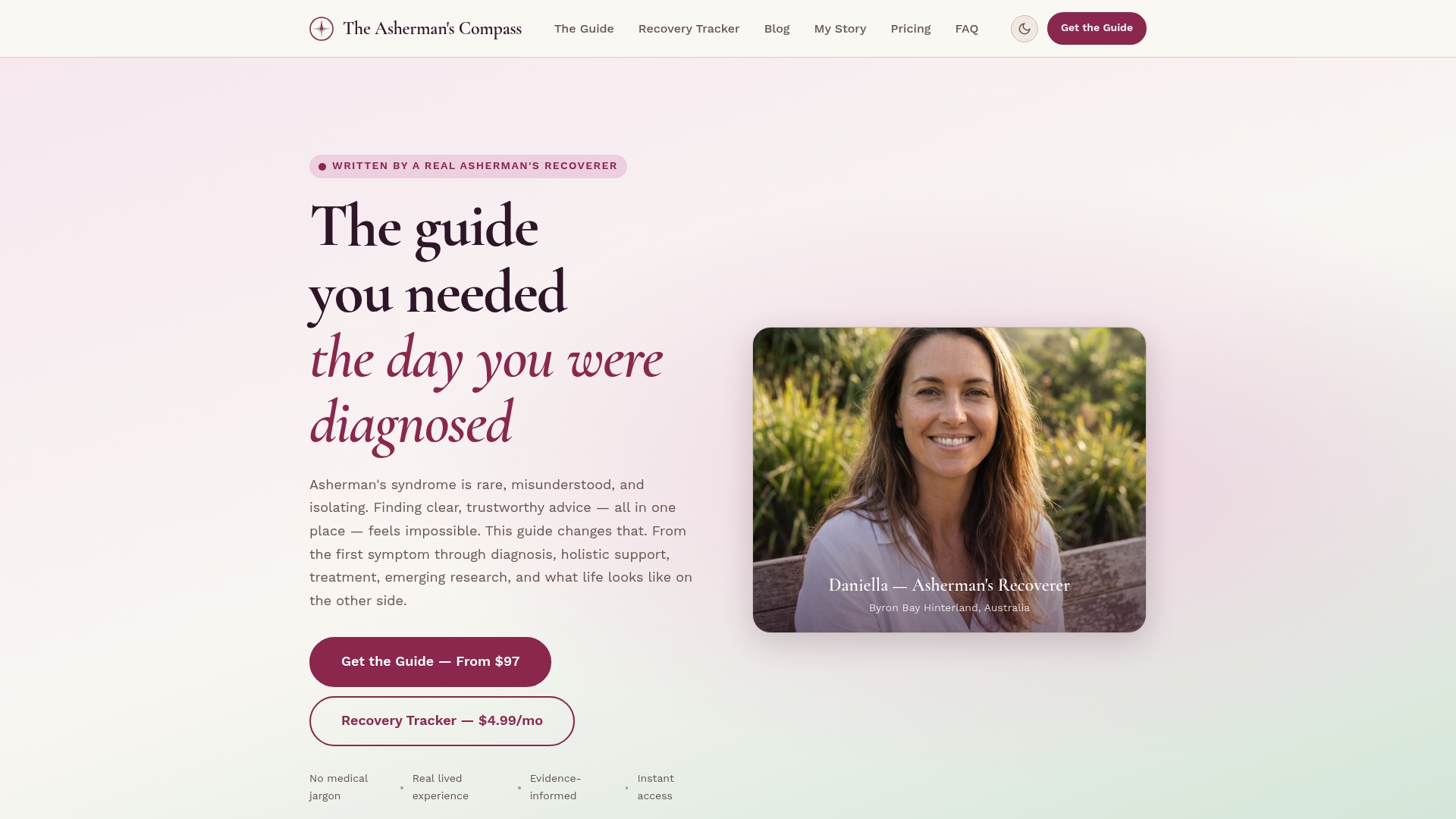
The Complete Recovery Guide includes 120 pages of evidence-informed guidance, 18 specialist-ready question scripts, and a global specialist directory. It is the resource that should have existed on diagnosis day. The Asherman’s Recovery Tracker at $4.99 per month helps you log symptoms consistently so your data is always appointment-ready. Whether you are just starting to advocate or deep into a diagnosis, these tools are built for exactly where you are. And 10% of every sale goes directly to the Compass Fund to support specialist care for women who need it most.
FAQ
What should I include in a period symptoms advocacy checklist?
Your checklist should include daily pain scores, bleeding changes, functional impacts like missed work, specific diagnostic requests, and a record of provider responses. Organized, written documentation is the single most effective tool for reducing dismissal.
How do I respond when a doctor says my symptoms are normal?
Ask what specific criteria would need to be met for further investigation, and request that any refusal of testing or referral be documented in your medical record. This approach redirects the conversation and increases provider accountability.
Can a normal ultrasound mean my symptoms are not serious?
No. Normal imaging does not exclude endometriosis or other uterine conditions. If your symptoms persist after a normal ultrasound, you can specifically request an MRI or a referral to a specialist for further evaluation.
Does bringing someone to my appointment actually help?
Yes. Research shows that having a support person present increases the likelihood of thorough evaluations and referrals, because advocates help corroborate symptom severity and functional impact.
How long does it typically take to get a diagnosis for period-related conditions?
The diagnostic delay for endometriosis averages 6 to 12 years. Bringing organized symptom logs to appointments can shorten that timeline by two to three years on average.
Recommended
- Why Are My Periods So Light After a D&C? — The Asherman’s Compass
- Blog — The Asherman’s Compass
- Asherman’s Syndrome Symptoms: A Complete Checklist | The Asherman’s Compass
- Why Are My Periods So Light After a Miscarriage? What You Need to Know | The Asherman’s Compass
Article generated by BabyLoveGrowth
Ready to Understand Your Body Better?
The Complete Asherman's Compass Guide covers everything from diagnosis to recovery — written from lived experience, backed by evidence.
Get the Complete Guide — $97Medical Disclaimer: This article is written from personal experience and is for informational purposes only. It is not medical advice. Please consult a qualified healthcare professional for diagnosis and treatment. The Asherman's Compass does not provide medical diagnoses.
Last reviewed: May 2026