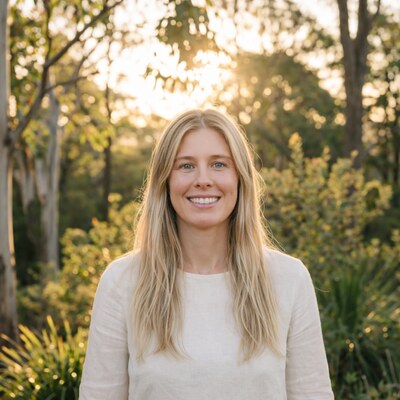
It started with something "routine"
I was told it was a simple procedure. Routine, they said. Nothing to worry about. And like most women in that situation, I trusted that — because why would I question it? Within weeks, I knew something was wrong. My cycle changed. My body felt different in a way I couldn't quite explain. I brought it up and was reassured. I brought it up again, and again. It took months, four different appointments, and my own relentless research before someone finally named what I had: Asherman's syndrome.
"The loneliest part wasn't the diagnosis. It was the weeks before — feeling that something was deeply wrong but having no framework to understand it."
The months of searching for answers
Once I had a name for it, I thought the hard part was over. It wasn't. I found myself drowning in fragmented information — academic papers I couldn't decode, forum threads full of conflicting advice, and a specialist who was knowledgeable but had fifteen minutes for me. I wanted to understand: what was happening inside my body, what my options were, what I could be doing in between appointments, and whether I was going to be okay.
None of that was in one place. Nothing addressed the whole picture — the medical side and the human side together. Nothing was written by someone who had actually been through it.
The holistic path alongside treatment
My treatment included surgery. But what supported me equally — maybe more in some ways — was the work I did around it. Nutrition, specific supplements, acupuncture, slowing down in ways that felt radical given how driven I'd always been. Seed cycling. The mind-body practices I was initially sceptical of. I'm not claiming any of it was the reason I healed. But I know it contributed to me feeling less like a passive passenger and more like someone actively caring for my own body.
That felt important. When so much of Asherman's is done to you — the procedure that caused it, the surgery to address it, the monitoring afterwards — being able to do things for yourself matters deeply.
The emotional terrain nobody prepares you for
Asherman's touches places that have nothing to do with uterine lining. It touches your sense of yourself as a woman, your relationship with your body, your hopes for the future. I grieved. I felt angry. I felt afraid. I felt, at various points, deeply alone in a way that's hard to describe to anyone who hasn't been inside this particular experience.
The emotional weight of Asherman's is almost never spoken about in the medical context. Your surgeon fixes the physical problem; nobody teaches you how to hold the rest of it. That absence is something I wanted to address directly in this guide — not in a vague, "remember to practise self-care" way, but in a real, honest, practical way.
"You are allowed to be devastated by this. And you are also going to be okay. Both things are true, even if right now only the first one feels real."
Why I built this guide
I'm on the other side of it now. And the thing I kept coming back to, once I had enough distance to look back clearly, was: if someone had given me this information at the start — all of it, in one place, written in plain language by someone who'd actually lived it — those months would have been so different.
Not easier, necessarily. Asherman's is hard. But less alone. Less confused. Less at the mercy of whatever information I happened to stumble across that day. More able to have productive conversations with my doctors. More able to understand what was happening and what I could do.
That is the only reason this guide exists. Not to replace your medical care — it's not that — but to sit alongside it. To be the knowledgeable, honest, lived-experience friend you wish you had at the beginning of this journey.