
Recovery from Asherman’s syndrome treatment is rarely talked about honestly. Most women leave their hysteroscopy with a pamphlet, a vague “take it easy,” and no real sense of what the next week will feel like. Learning how to manage pain after Asherman’s procedure is one of the most practical things you can do before you even get to the operating room. The right preparation makes the difference between a recovery that feels scary and one that feels manageable. This guide covers what to expect, what to have ready, and how to respond when something feels off.
| Point | Details |
|---|---|
| Typical pain duration | Pain after Asherman’s procedure usually lasts 3 to 7 days and resolves with mild treatments. |
| Pelvic rest importance | Avoid intercourse and tampons for at least 2 weeks to prevent infections and scar recurrence. |
| Use multimodal pain relief | NSAIDs, heating pads, and hormonal therapy together promote healing and reduce pain effectively. |
| Monitor symptoms carefully | Track pain and bleeding daily and contact your doctor if severe symptoms or complications arise. |
| Seek specialist help if needed | Persistent or severe pain may require nerve blocks and specialist care to improve recovery outcomes. |
The most important thing to know first: some pain is expected, and it does not mean something went wrong. After hysteroscopic adhesiolysis (the surgical removal of uterine scar tissue), your uterus has been through real trauma. It needs time to settle.
Cramping and light bleeding are common for 3 to 7 days after the procedure, and most pain is manageable with over-the-counter options like Tylenol or Advil. Think of it like period cramps that come and go in waves, usually strongest in the first 24 to 48 hours and gradually easing after that. Spotting or light bleeding can continue for up to 10 days, which is also normal.
Knowing the recognizing Asherman’s post-op symptoms that fall outside normal range is just as important as knowing what is typical. Here is a quick breakdown:
Normal pain symptoms after Asherman’s:
Warning signs that need a doctor’s attention:
Pro Tip: Write down your pain level each morning on a simple 1 to 10 scale. If the number is not trending down by day 3, that is your signal to call your doctor. You are not being dramatic. You are being smart.
Now that you understand typical pain patterns, let’s talk about what to have ready before you come home from surgery. Walking in the door exhausted and in pain is not the moment to realize you have no heating pad and nothing in the medicine cabinet.
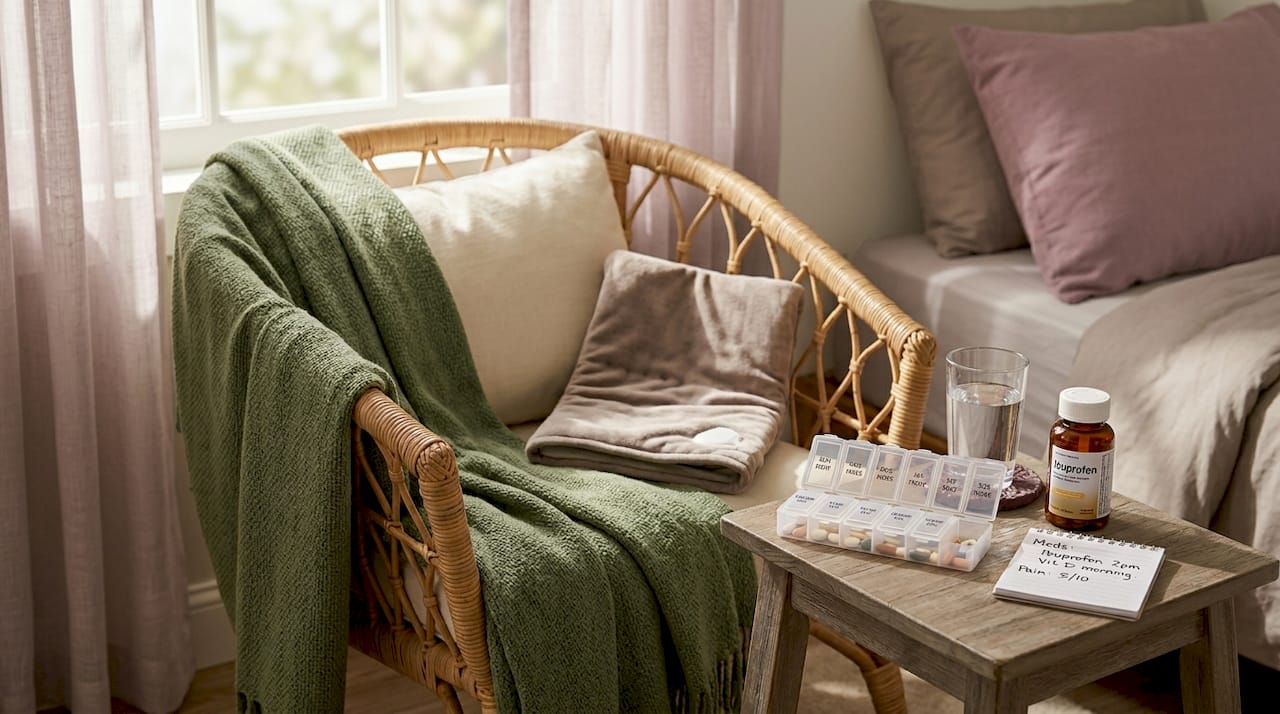
Pelvic rest means no intercourse or tampons for at least 2 weeks after the procedure to prevent infection and adhesion recurrence. This is non-negotiable. Your uterus is healing from the inside out, and anything that introduces bacteria or physical pressure can undo that work fast.
Here is what to stock before your procedure:
| Item | Purpose | Notes |
|---|---|---|
| Ibuprofen (Advil) | Reduces inflammation and cramping | Take with food; follow dosage instructions |
| Acetaminophen (Tylenol) | Pain relief without anti-inflammatory effect | Safe to alternate with ibuprofen |
| Heating pad | Eases uterine cramping | Use on low to medium heat; never sleep with it on |
| Menstrual pads (not tampons) | Manage light bleeding | Stock several sizes |
| Electrolyte drinks | Support hydration and recovery | Coconut water or low-sugar sports drinks work well |
| Light snacks and easy meals | Sustain energy without taxing digestion | Soups, smoothies, toast |
Beyond supplies, your behavior in the first two weeks matters enormously for post-op care essentials. No baths, no swimming, no strenuous exercise. Short walks around the house are fine and actually helpful for circulation. Anything that raises your heart rate significantly or strains your pelvic floor should wait.
Recovery precautions checklist:
Pro Tip: Set phone reminders for your medication schedule in the first 3 days. When you are tired and in pain, you will forget. Staying ahead of the pain is far easier than trying to catch up once it spikes.
With preparations done, here is how to actively manage your pain and support healing during recovery.
The most effective approach is not a single medication but a layered one. Taking ibuprofen and acetaminophen in alternating doses (rather than together) can provide more consistent coverage than either alone. For example, take ibuprofen at 8am, acetaminophen at 12pm, ibuprofen at 4pm, and so on. Always follow the dosing instructions on the packaging and check with your doctor if you have any kidney or stomach concerns.
Step-by-step pain management during recovery:
“Multimodal pain management approaches, including NSAIDs and targeted therapies, are more effective at preventing chronic pain after adhesiolysis by controlling early inflammation at the source.”
For most women, this approach handles recovery pain well. But if your pain is severe or does not respond to over-the-counter options, your doctor may discuss more targeted interventions. Ultrasound-guided nerve blocks reduce chronic pelvic pain by nearly 50% and significantly decrease opioid use in women with persistent post-surgical pain. This is not a first-line option, but it is good to know it exists if you need it.
For more on using hormone therapy for healing after your procedure, including how estrogen supports endometrial repair, that resource goes deeper into the why behind your prescription.
After managing pain actively, you need to monitor your symptoms carefully to make sure your recovery is on track.
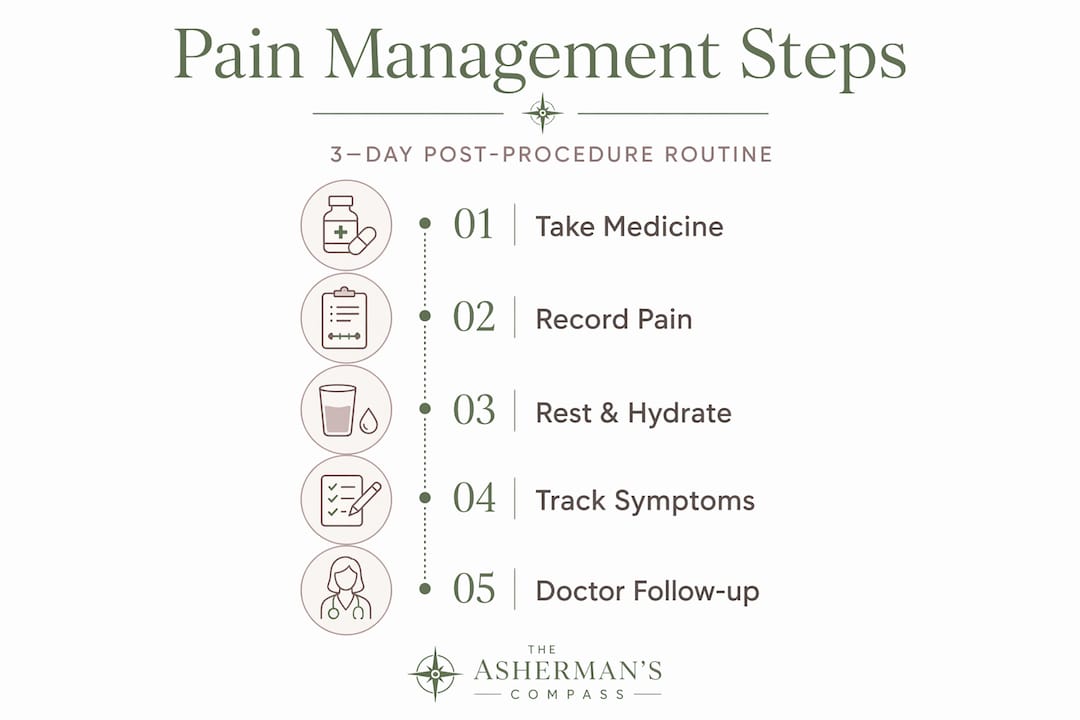
A daily pain diary is one of the simplest and most useful tools you have. It does not need to be elaborate. Just note your pain level (1 to 10), any bleeding or discharge, your temperature if you feel unwell, and any medications taken. Over a week, this creates a clear picture of whether you are improving or not.
What normal recovery looks like day by day:
Call your doctor if pain worsens after day 3, if you develop a fever above 100.4°F, or if heavy bleeding occurs. These are not minor concerns. They can indicate infection or early re-adhesion, both of which are easier to treat when caught early.
Monitoring checklist:
Your follow-up and diagnosis appointment is not a formality. This is where your doctor confirms whether the uterine cavity has healed cleanly or whether further intervention is needed. Do not skip it, even if you feel fine.
Pro Tip: Bring your pain diary to your follow-up. Doctors make better decisions with data. A week of logged symptoms tells your specialist far more than “I had some cramping.”
If your pain does not improve or worsens, these advanced strategies and warning signs will help you navigate next steps safely.
Most post-procedure pain resolves within a week. When it does not, that is a signal worth taking seriously. Persistent severe pain may indicate infection or re-adhesion, both of which need specialist evaluation rather than more painkillers.
Signs that require immediate medical contact:
“Seeking early specialist care for persistent pain after Asherman’s surgery significantly improves outcomes and reduces the risk of long-term complications.”
If your doctor rules out infection and re-adhesion but pain continues, ask about a referral to a pelvic pain specialist. Office-based nerve blocks are a minimally invasive option that can reduce chronic pelvic pain significantly and decrease reliance on opioid medications. These are not experimental. They are increasingly used as a standard part of chronic pelvic pain protocols.
Do not overlook the emotional side of this recovery. Coping with pain after surgery is not just physical. Anxiety, grief, and frustration are real and valid, especially when you have already been through so much to get here. Free mental health support resources exist and are worth using. Talking to someone who understands the emotional weight of Asherman’s can reduce the psychological burden that often makes physical pain feel worse.
For more on signs of complication and chronic pain after Asherman’s, including what re-adhesion looks like and when to push for a second opinion, that resource covers the territory your discharge paperwork probably did not.
Here is the part most post-op guides skip entirely: pain management after Asherman’s is not just about comfort. It is directly connected to whether your uterus heals the way it needs to.
When pain is undertreated, women tense up, avoid movement, skip medications, and disengage from their care plan. That disengagement has real consequences. Hormonal therapy gets skipped. Follow-ups get delayed. Early warning signs get ignored. And the window for catching re-adhesion early closes.
On the flip side, overusing aggressive pain medication, particularly opioids, without medical guidance can mask symptoms that need attention. If you cannot feel that your pain is worsening because you are heavily medicated, you lose the feedback loop your body is trying to give you.
The most effective approach is integrated. Post-op estrogen therapy combined with anti-adhesion barriers stimulates healthy endometrial growth and prevents recurrence in up to 50% of severe Asherman’s cases. Pain management supports that process by keeping you comfortable enough to rest, comply with your care plan, and show up to your follow-ups.
What I have seen, and what the evidence supports, is that women who understand why they are managing pain, not just how, have better outcomes. When you know that staying on top of your ibuprofen schedule is protecting your endometrium, not just relieving discomfort, it changes how you approach recovery. You stop treating pain management as optional and start treating it as part of the treatment itself.
The hormonal therapy benefits for fertility after Asherman’s are real, but they only work if the physical environment they are trying to support is also being protected. Pain control, pelvic rest, hydration, and emotional care are not soft extras. They are the scaffolding your healing depends on.
Recovery from Asherman’s is one of those experiences where having the right information at the right moment changes everything. Not a Google search at midnight, but a clear, organized roadmap built specifically for what you are going through.
The Asherman’s Compass was built by someone who walked this road first. The Asherman’s recovery tracker lets you log pain, bleeding, and symptoms daily so you can spot patterns and walk into your follow-up with real data. The complete recovery guide covers everything from post-op care to fertility planning in 120 pages written in plain language, not medical jargon. And when you need community, the social media recovery support connects you with women who actually get it. You do not have to piece this together alone.
Most post-procedure pain lasts 3 to 7 days and is manageable with over-the-counter pain relievers. Cramping and light bleeding are expected during this window and typically ease each day.
Contact your doctor if pain worsens after day 3, you develop a fever over 100.4°F, or experience heavy bleeding soaking a pad hourly. These warning signs may indicate infection or re-adhesion and need prompt evaluation.
Safe options include ibuprofen or acetaminophen for cramping, heating pads for uterine discomfort, and prescribed estrogen therapy to support healing. NSAIDs taken proactively are more effective than waiting until pain peaks.
Yes. Persistent pelvic pain can respond well to specialist treatments including ultrasound-guided nerve blocks. These interventions reduce chronic pelvic pain by nearly 50% and significantly decrease opioid use in women with ongoing post-surgical pain.
Article generated by BabyLoveGrowth
The Complete Asherman's Compass Guide covers everything from diagnosis to recovery — written from lived experience, backed by evidence.
Get the Complete Guide — $97Medical Disclaimer: This article is written from personal experience and is for informational purposes only. It is not medical advice. Please consult a qualified healthcare professional for diagnosis and treatment. The Asherman's Compass does not provide medical diagnoses.
Last reviewed: May 2026